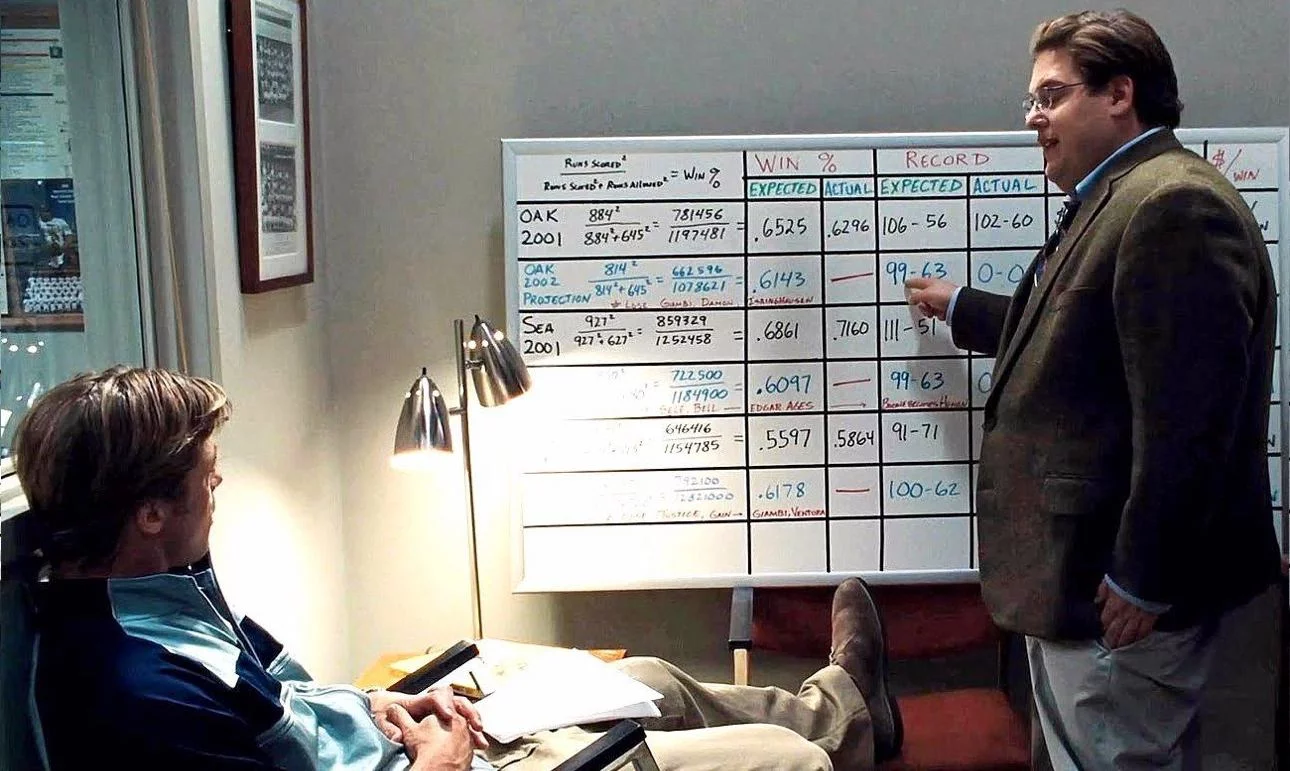
Are You Drafting Players, or Wins?
Oh, boys, ladies, and gents, it's your man from the Gazette Sports Bureau (GSB) back at it again to dig into yet another mystery of the fantasy football universe. After an exceptionally long week of work, I decided to hole myself up into my office and do exactly one thing - catch up on all the fantasy content I didn't write this week.
Thankfully, I am now all up to date which means my hands are idle and the devil just opened his workshop. To fight back from Satan's influence, I decided to dive DEEP into a topic I have long wanted to better understand - what is a fantasy football player actually worth?
Every year we all remember the big names, the guys who score the most points week in and week out. The problem is that fantasy football is not always just about the points, but instead it's all about WINS.
And that really is what we care about, right? Winning? We don't exactly talk a ton of shit after taking the proverbial L for the week just because we had one high scorer in the lineup.
So, in reality, that should be our goal when drafting fantasy football players. Not to draft those who are projected the most points, but instead who will result in your team obtaining the most wins.
To do just that, we cooked up something real nice in the GSB labs - allow me to introduce you to NWA.
Net Wins Added - A GSB Metric
To best capture which players can contribute more wins to your team for a whole season, we developed a metric called Net Wins Added, or NWA for short.
This is a metric that attempts to capture how many additional wins a player generates compared to a standard replacement-level player at the same roster slot. We used Sleeper data from 2024 to 2026 Week 6, and used both player and weekly matchup data.
We then developed a standard fantasy team that would produce wins approximately 50% of the time. That roster would then be altered by a single player and we ran 100,000 simulations to determine the probability of a win on any given week against any given opponent.
That probability, less our baseline, is then multiplied by the standard 14-game season and the result is our final NWA value:
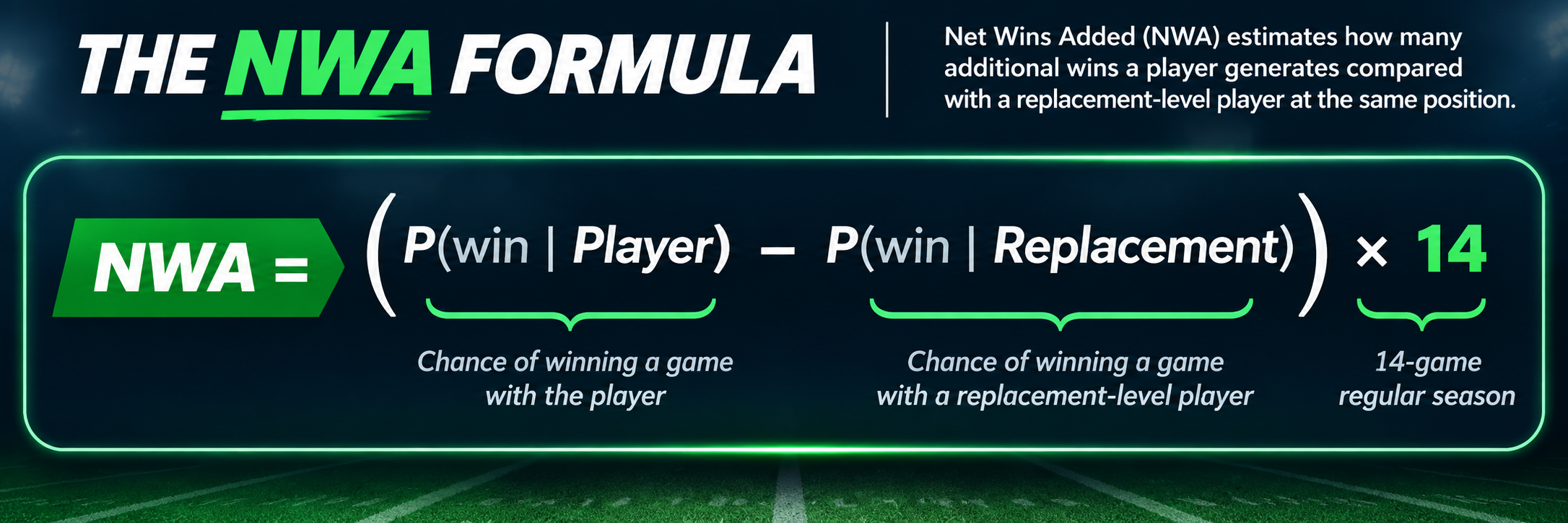
For example, Kyren Williams has an NWA of +1.13 which means that, on average, your team will win an additional 1.13 games if Williams is a part of the starting lineup. Compare that with CJ Stroud who has a NWA of -0.51 which means he is going to cost you half a game compared to what you'd otherwise win.
Now we are getting somewhere, and we can start to think about players through the lens of wins rather than just yards, touchdowns, and fantasy points. So now that we have it, what does NWA tell us?
The NWA Elite: Real Fantasy Difference Makers
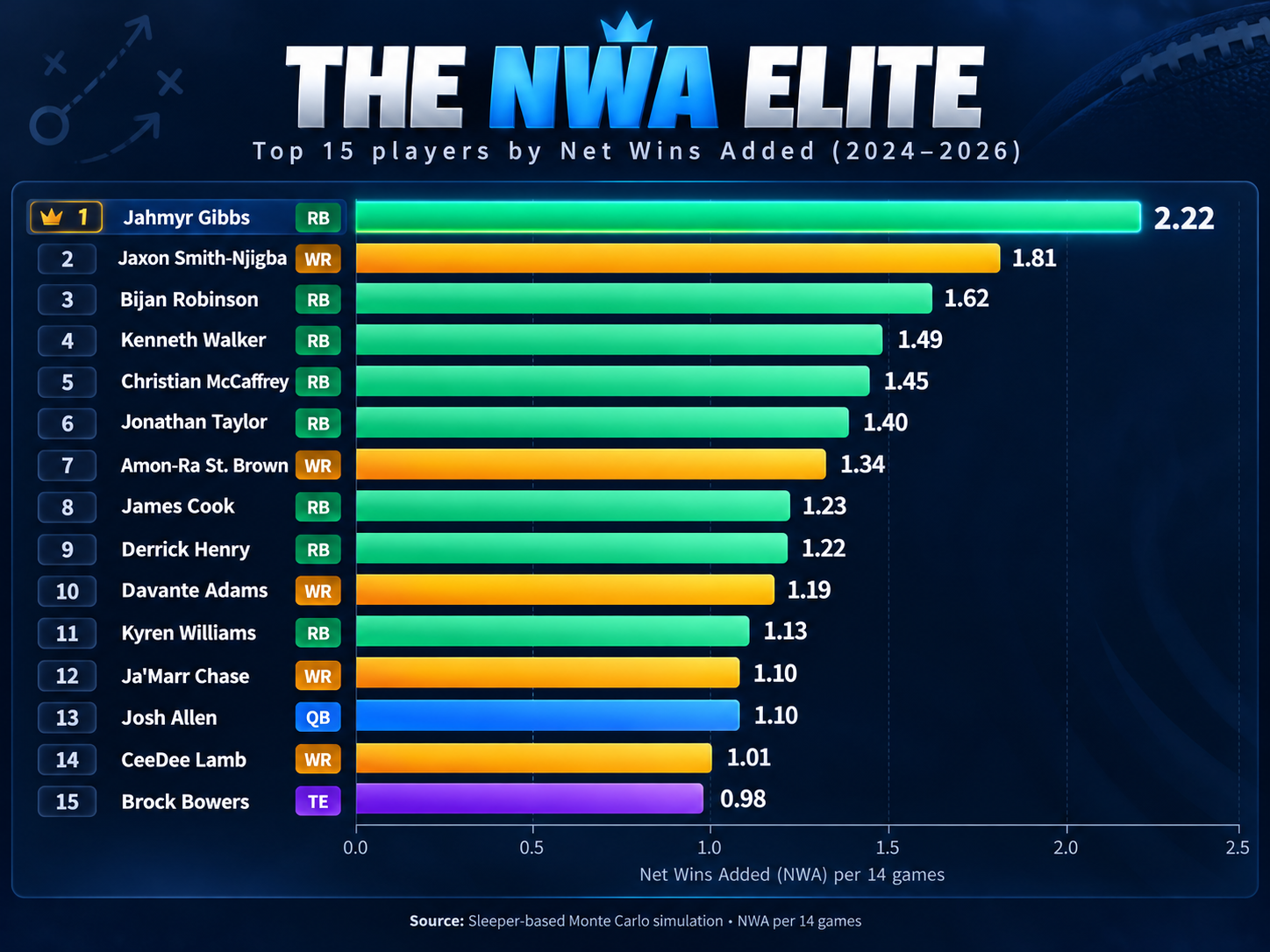
Behold! I give you the official Top 15 best fantasy players by NWA through Week 6 of the 2026 season. Let's dive in and see what themes make themselves apparent when considering where fantasy wins come from.
First and foremost, Jahmyr Gibbs is far and away our top dog when it comes to adding fantasy wins to his owner's ledger. I'm sure this comes as a surprise to no one here, but what is surprising is just how far ahead he is compared to everyone else. Even next to our #2 guy, Jaxon Smith-Njigba, Gibbs is still worth nearly half a win more than the next best option.
Gibbs isn't the only running back though, as over half of this Top 15 are at the same position. WR, predictably, comes in at second with five slots, and then QB and TE both have their sole representatives.
This was a decent surprise to me at least considering how often discourse revolves around things like "positional advantage" when talking about both quarterbacks and tight ends. Turns out the value to be added comes from our core positions rather than trying to have an edge in a single spot.
Sure, getting a Trey McBride (+0.89) or a Lamar Jackson (+0.27) feels good in the moment, but if it means giving up a third-round chance to nab Kyren Williams (+1.13) you actually might be missing out on key value early.
Not All Positions Are Created Equal
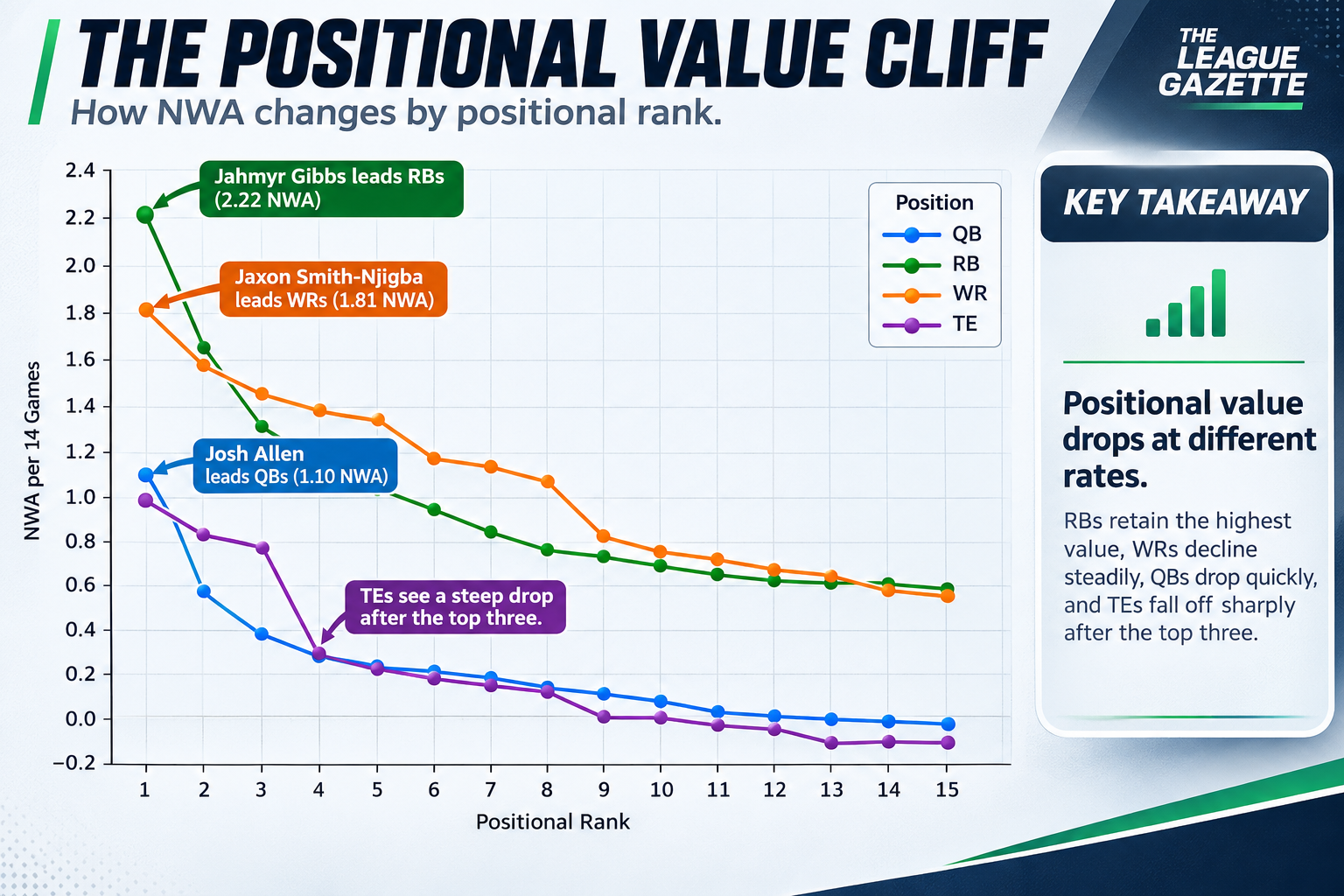
Next I want to take a look at just how impactful each position is, and where we start to see a real drop off. The graph above shows the top 15 players in each position category and how many additional wins they provide.
Once again, the running backs and receivers clearly have a huge advantage when it comes to winning more games, but what's interesting is the drop off for others.
Quarterbacks have more of a gradual decline, where only two players will gain you more than a half game. After that, the NWAs of all the best remaining QBs hover in the +0.00-0.25 range. Josh Allen remains the anomaly here where his rushing upside and constant touchdown potential gives him a huge boost.
Tight ends are even more interesting than quarterbacks. The top three players at the position actually provide a material amount of value. However, after that the wins added drops significantly and the next five options are essentially the same in the long run. The four after that have neutral impacts, which seems to indicate you can have them on your roster and not be any worse off.
The last noteworthy trend is how running backs and receivers differ. The top spots are dominated by backs, while the rest of the way the receivers seem to hold a much more consistent bump in wins added. This is likely a product of our full-point-per-reception (PPR) format as that can provide a very stable floor for even second-tier receivers.
Why Points Aren't Everything
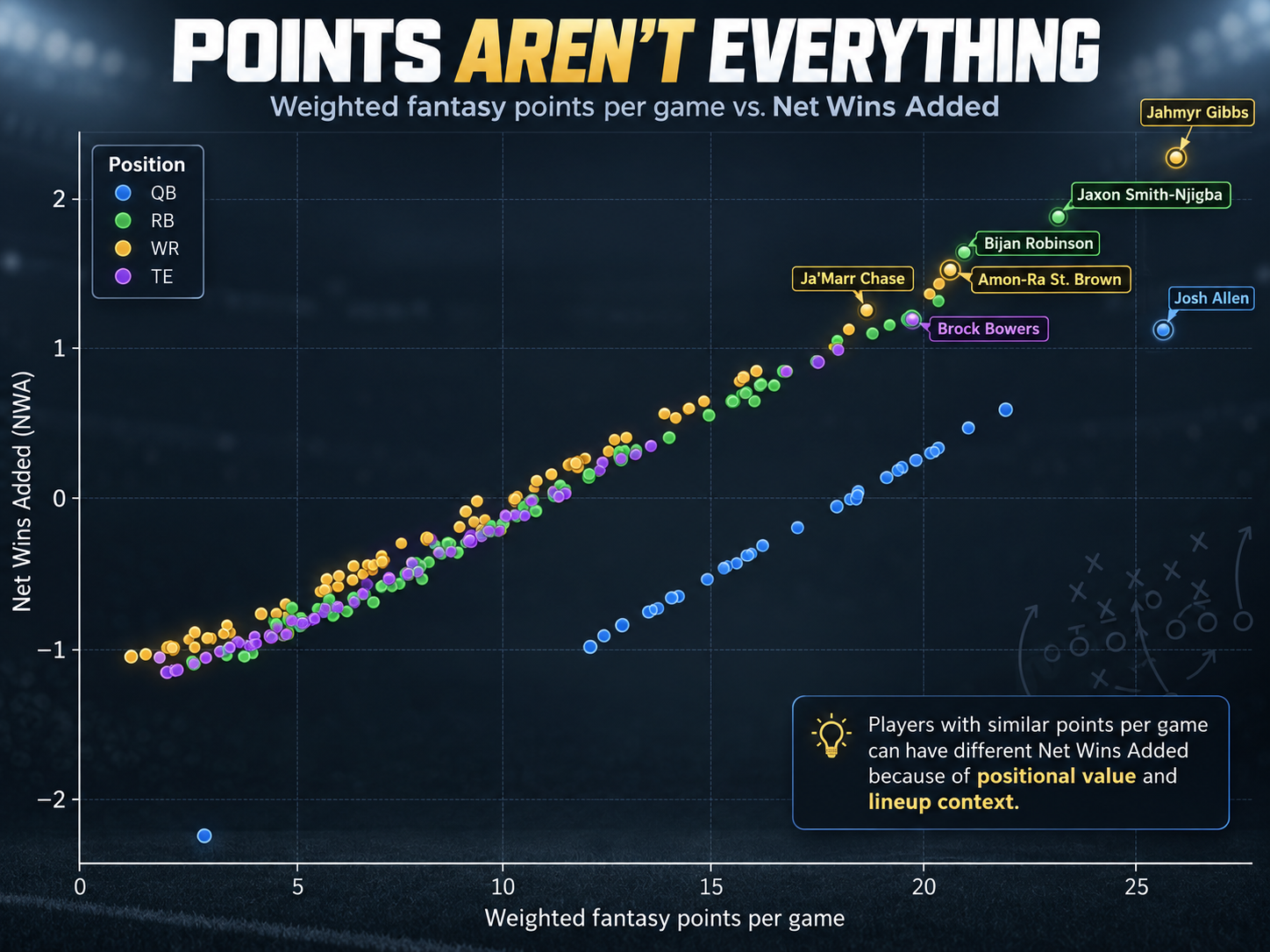
Although getting as many points as you can seems like the go-to strategy on paper, it can really matter where those points are coming from in how it impacts your future wins.
From the chart above, you can see how the quarterbacks are in their own neighborhood as they generally score the most points on average. They also just so happen to have much lower NWAs than other positions since there is far more parity at the position than a lot of us realize.
One quarterback will be slightly better than another, but they won't necessarily make a huge impact on winning more games than another option.
With the sole exception of Josh Allen, of course....
The other positions are clustered together higher up in the metric, but those all-star backs and receivers really show their added value due to their high-level production potential.
Once again it's pretty hilarious to see Gibbs so head and shoulders above everyone else. It feels like I'm making a mid-90s Jordan or 2018 LeBron comparison in regards to the vast difference between the best player and everyone else.
A Use Case: The Drafting Tier List
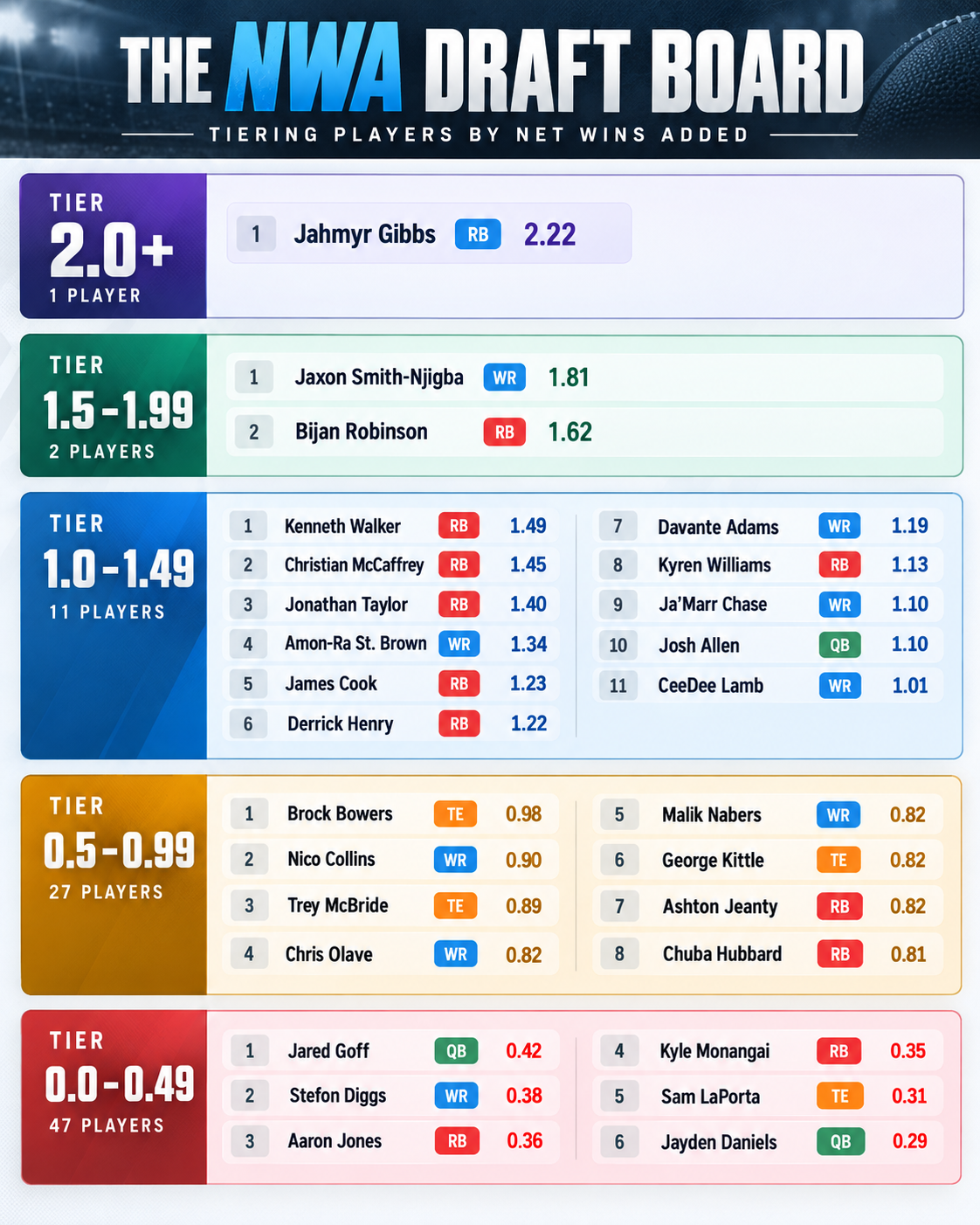
Now I can hear all of you skeptics already: "AJ this is great and all, but how the hell does this make any sort of difference to me in my fantasy owner life?"
Well, I present to you one option: The Drafting Tier List
This tier list groups players by their respective NWA brackets so you can visualize where elite value is versus middle tier. At the top we have our usual suspects, and we didn't exactly reinvent the wheel. However, when you look into the third and fourth layers we can start to see opportunity.
Players like Chuba Hubbard, Trey McBride, and Kyren Williams are the biggest examples of value we could have used in our draft this year. Armed with this information we could have avoided players like Omarion Hampton, Chase Brown, and Drake London, to name a few.
Understanding how to utilize your next pick from a winning standpoint can be far more useful than just drafting the guy at the next ADP slot given to you by Sleeper.
So, What is the Price of Winning?
In the end, fantasy football is going to do what it wants and the Gods of the game will play with our emotions no matter what. All the more reason to try and get an edge where you can.
The biggest lessons I have personally taken from this are as follows:
Drafting a QB early only really pays off for one or two guys at most, if you don't get Allen, just move on.
Drafting a TE early can be worthwhile, but if the run starts right after you make your pick there likely won't be worthwhile guys left to do the same.
When in doubt, secure a high-level running back or receiver - odds are they'll give you more wins in the long run.
Draft Jahmyr Gibbs if you have the #1 pick, the dude is literally built different.
So there is your answer. We found some unique relationships, identified some slightly undervalued players, and discovered that most QBs are a dime a dozen.
The model isn't perfect, of course, and anything can happen in fantasy, but if your goal is to make the most of your draft spot, make sure you draft for wins and not for names.


Reader conversation
Join the conversation
Share your take on this story. Comments publish immediately, and you can edit your own comment whenever you need to.
Sign in to add your perspective.
No comments yet. Be the first to share a thought.